【引言】
随着无废农业建设持续推进,2026 年烘干设备能效、环保相关新规全面落地。国家收紧工业烘干设备能效管控,畜禽固废处置标准化监管升级,老旧高能耗烘干设备加速淘汰。不少养殖场、固废处理企业既担心环保稽查处罚,又苦于看不懂补贴细则、申报踩坑,投入资金却拿不到政策红利。本篇从标准更新、补贴细则、合规红线、税收优惠、申报实操多角度,系统拆解 2026 农牧固废烘干相关政策,帮助养殖主体选对设备、顺利申领补贴。
With the continuous advancement of waste-free agriculture construction, new regulations concerning energy efficiency and environmental protection for drying equipment fully take effect in 2026. The state has tightened energy efficiency controls on industrial drying equipment and upgraded standardised supervision for livestock and poultry solid waste disposal, accelerating the phasing-out of old, high-energy-consumption drying equipment. Many farms and solid waste treatment enterprises fear penalties from environmental inspections while struggling to understand subsidy rules and avoid pitfalls during applications. They invest capital yet fail to secure policy benefits. This article systematically breaks down policies related to agricultural and livestock solid waste drying in 2026 from multiple dimensions, including standard updates, subsidy details, compliance red lines, tax incentives and practical application guidance, helping farming entities select proper equipment and successfully apply for subsidies.
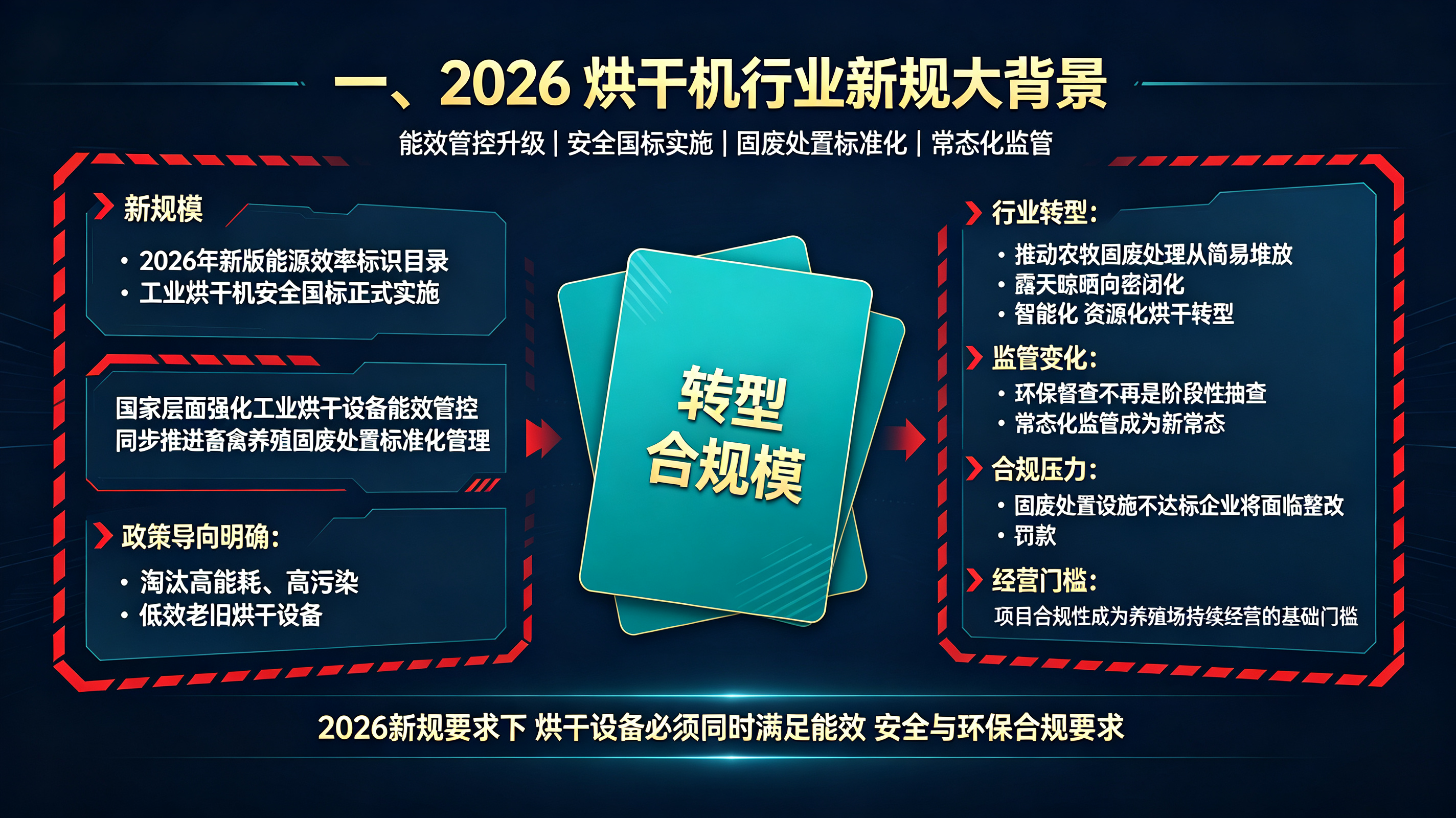
一、2026 烘干机行业新规大背景
2026 年新版能源效率标识目录、工业烘干机安全国标正式实施,国家层面强化工业烘干设备能效管控,同步推进畜禽养殖固废处置标准化管理。政策导向明确淘汰高能耗、高污染、低效老旧烘干设备,推动农牧固废处理从简易堆放、露天晾晒向密闭化、智能化、资源化烘干转型。环保督查不再是阶段性抽查,常态化监管下,固废处置设施不达标企业将面临整改、罚款,项目合规性成为养殖场持续经营的基础门槛。
I. General Background of New 2026 Regulations for the Dryer Industry
The 2026 revised Energy Efficiency Label Catalogue and national safety standards for industrial dryers have been formally implemented. At the national level, energy efficiency supervision of industrial drying equipment is strengthened, alongside the advancement of standardised management for solid waste disposal from livestock and poultry breeding. The policy explicitly targets the elimination of outdated drying equipment with high energy consumption, heavy pollution and low efficiency. It promotes the transformation of agricultural and livestock solid waste treatment from simple stockpiling and open-air drying towards enclosed, intelligent and resource-oriented drying. Environmental inspections are no longer periodic spot checks. Under regular supervision, enterprises with substandard solid waste disposal facilities face rectification orders and fines. Project compliance has become a basic threshold for farms to sustain operations.
二、烘干设备强制标准更新,三大硬性要求必须达标
2026 版烘干机能效限定值、安全运行标准、废气粉尘排放新标准正式落地,针对农牧领域烘干设备划定硬性门槛,必须同时满足节能降耗、密闭无尘、无害化处理三大核心要求。设备能效指标、粉尘与臭气排放、高温灭菌无害化能力均纳入验收核查项。老旧简易滚筒、无配套除尘除臭的低端设备,能效不达标、尾气排放超标,不仅无法通过环保验收,也失去各类补贴项目申报资格。选购设备,优先核验能效检测报告、环保排放资质文件。
II. Updated Mandatory Standards for Drying Equipment: Three Hard Requirements Must Be Met
The 2026 standards for dryer energy efficiency limits, safe operation, waste gas and dust emissions have officially come into force, setting rigid thresholds for drying equipment used in agriculture and livestock. Equipment must simultaneously satisfy three core requirements: energy conservation, dust-free enclosure and harmless treatment. Equipment energy efficiency indicators, dust and odour emissions, and high-temperature sterilisation capacity for harmless treatment are all included in acceptance inspections. Old simple rotary dryers and low-end units without supporting dust and odour removal systems suffer from substandard energy efficiency and excessive tail gas emissions. Such equipment cannot pass environmental acceptance and is disqualified from various subsidy applications. When purchasing equipment, priority should be given to verifying energy efficiency test reports and environmental qualification documents.
三、养殖烘干设备专项补贴政策,分级申领细则解读
2026 畜禽粪污资源化利用补贴、老旧设备技改补贴持续开放申报,普遍采用先建后补、以奖代补模式。
分级补助比例:多地项目补贴最高可达项目总投资50%;
限额管控:单项目设置最高补助金额上限;
专项奖励:规模化粪污集中处理园区、种养循环示范基地,可额外申请专项奖补资金。
申报主体包含规模化养殖场、农牧产业园、固废社会化处理中心,不同省份、区县申报条件、补助额度存在地域差异,需要提前核对当地农业农村局、生态环境局文件要求。
III. Special Subsidy Policies for Farm Drying Equipment: Interpretation of Tiered Application Rules
Applications for 2026 livestock manure resource utilisation subsidies and technical renovation subsidies for old equipment remain open, generally adopting the model of “subsidies after construction” and “rewards in place of subsidies”.
Tiered subsidy ratio: In many regions, project subsidies can cover up to 50% of total project investment.
Cap control: A maximum subsidy amount is set for individual projects.
Special incentives: Large-scale concentrated manure treatment parks and crop-livestock recycling demonstration bases may apply for additional special reward funds.
Applicants include large-scale farms, agricultural and livestock industrial parks and socialised solid waste treatment centres. Eligibility criteria and subsidy amounts vary by province, city and county. Applicants should review documents issued by local agricultural and rural bureaus and ecological environment bureaus in advance.
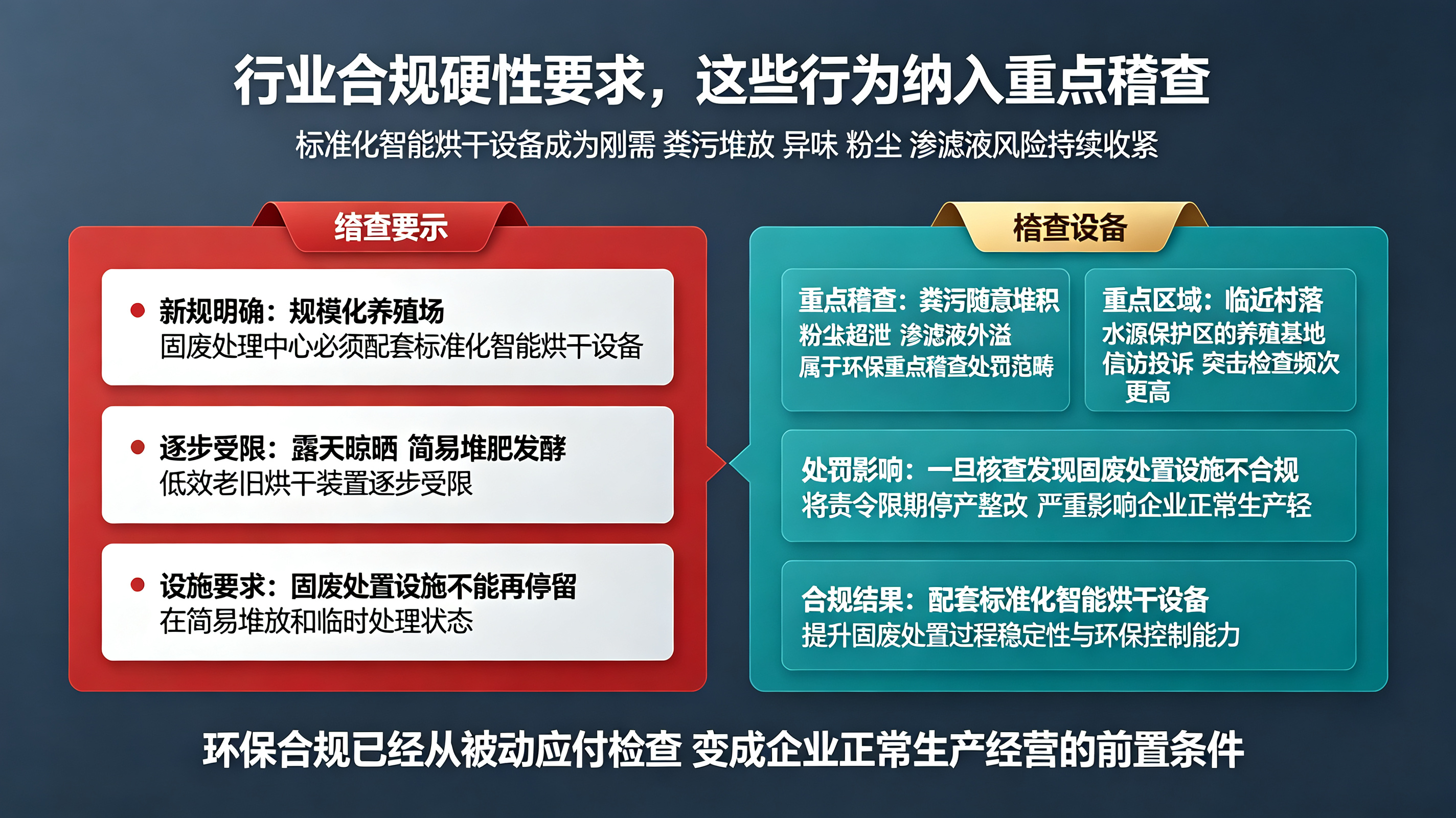
四、行业合规硬性要求,这些行为纳入重点稽查
新规明确:规模化养殖场、固废处理中心必须配套标准化智能烘干设备。露天晾晒、简易堆肥发酵、低效老旧烘干装置逐步受限。粪污随意堆积、异味超标、粉尘外泄、渗滤液外溢,属于环保重点稽查处罚范畴。尤其是临近村落、水源保护区的养殖基地,信访投诉、突击检查频次更高,一旦核查发现固废处置设施不合规,将责令限期停产整改,严重影响企业正常生产经营。
IV. Mandatory Industry Compliance Requirements: Behaviors Targeted in Key Inspections
New regulations stipulate that large-scale farms and solid waste treatment centres must be equipped with standardised intelligent drying equipment. Open-air drying, simple compost fermentation and inefficient outdated drying devices are gradually restricted. Random manure stacking, excessive odour, dust leakage and leachate overflow fall under the scope of key environmental inspection penalties. For breeding bases near villages or water source protection zones, complaint handling and surprise inspections occur more frequently. Once non-compliant solid waste disposal facilities are identified, mandatory production suspension and rectification will be ordered, seriously disrupting normal business operations.
五、资源化税收红利解析,固废项目可享受税费减免
购置固废资源化烘干设备、建设有机肥加工生产线,可享受资源综合利用相关税收红利,贴合无废乡村、循环农业扶持政策。符合条件的主体可申报增值税减免、企业所得税优惠。税收优惠需要配套完整的设备资质、物料处置台账、资源化产品销售记录,项目前期规划时就要提前留存全套资料,保障后期顺利享受税费减免。
V. Resource-oriented Tax Incentives: Tax Relief Available for Solid Waste Projects
Purchasing solid waste resource utilisation drying equipment and building organic fertiliser production lines qualify for tax benefits related to comprehensive resource utilisation, aligned with supportive policies for waste-free villages and circular agriculture. Eligible entities may apply for VAT reductions and corporate income tax preferences. Tax incentives require complete equipment qualifications, material disposal ledgers and sales records of recycled products. Full documentation should be preserved during early-stage project planning to ensure smooth access to tax relief later.
六、合规设备适配标准:金万泓设备满足2026 最新国标
金万泓全系烘干设备符合2026 最新国标能效、环保、安全要求,全套资质、第三方检测报告、项目验收资料齐全,可直接用于项目环评验收、补贴申报。 卧式闪蒸、三回程、单筒等系列机型,密闭负压除尘除臭设计,配套无害化处理工艺,适配鸡粪、牛粪、秸秆、药渣、煤泥等各类高粘高湿固废,满足各地农业农村、环保部门项目核查标准,从设备层面消除申报资料不合规风险。
VI. Compliance Equipment Matching Standards: Jinwanhong Equipment Meets the Latest 2026 National Standards
All Jinwanhong drying equipment complies with the latest 2026 national standards on energy efficiency, environmental protection and safety. Complete qualifications, third-party test reports and project acceptance materials are available directly for EIA acceptance and subsidy applications. Models including horizontal flash dryers, three-pass dryers and single-cylinder dryers feature enclosed negative-pressure dust and odour removal systems paired with harmless treatment processes. They handle diverse high-viscosity and high-moisture solid waste such as chicken manure, cow manure, straw, herb residues and coal slime, meeting inspection standards set by local agricultural and environmental authorities. Equipment eliminates risks of non-compliant application documents at the hardware level.
七、2026 申报流程与落地案例,避坑指南
完整申报流程:项目立项备案→编制实施方案→设备选型采购→施工安装调试→第三方检测→项目验收→资金拨付。 高频申报误区:选用无资质非标设备、资料缺失不全、项目建设内容与申报方案不一致、重复申报同类补贴。 金万泓拥有全国多地养殖场设备技改、粪污资源化项目成功申报落地实例,可协助客户梳理申报材料清单,规避常见审核雷区,提高补贴申报通过率。
VII. 2026 Application Process & Real Cases: Pitfall Avoidance Guide
Complete application workflow: Project filing → Implementation plan compilation → Equipment selection and procurement → Construction, installation and commissioning → Third-party testing → Project acceptance → Fund disbursement. Common application mistakes: Adopting non-standard equipment without qualifications, incomplete documentation, inconsistency between constructed works and approved plans, repeated applications for similar subsidies.
Jinwanhong has numerous successful cases of equipment technical renovation and manure resource project subsidy applications for farms nationwide. We can assist clients in sorting document checklists, help avoid common audit pitfalls and raise the success rate of subsidy applications.